October 16, 2025
Rocket Learning Rewards
Apart from the many disruptions faced by organisations in their daily activities, an escalating compliance crisis threatens their operational integrity and regulatory standing with serious consequences.
In the EU, for instance, a single oversight in employment laws or data protection regulations can trigger penalties reaching 4% of global turnover. So, compliance really is a serious matter.
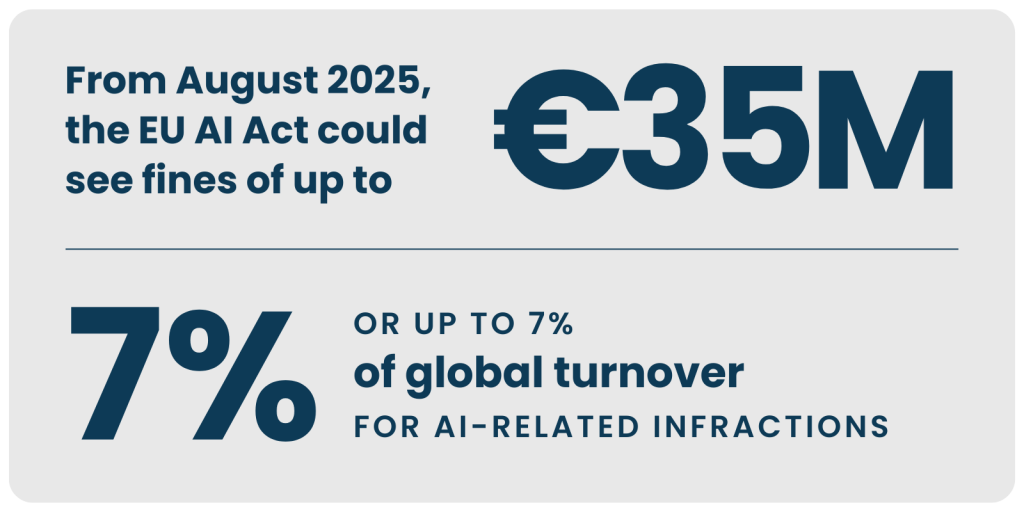
With the EU Artificial Intelligence Act that came into force on 2 August 2025, businesses are preparing for a new era of compliance challenges, potentially facing fines of up to €35 million or 7% of global turnover for AI-related infractions. The cumulative total of fines under the General Data Protection Regulation (GDPR) has reached approximately €5.88 billion by January 2025.
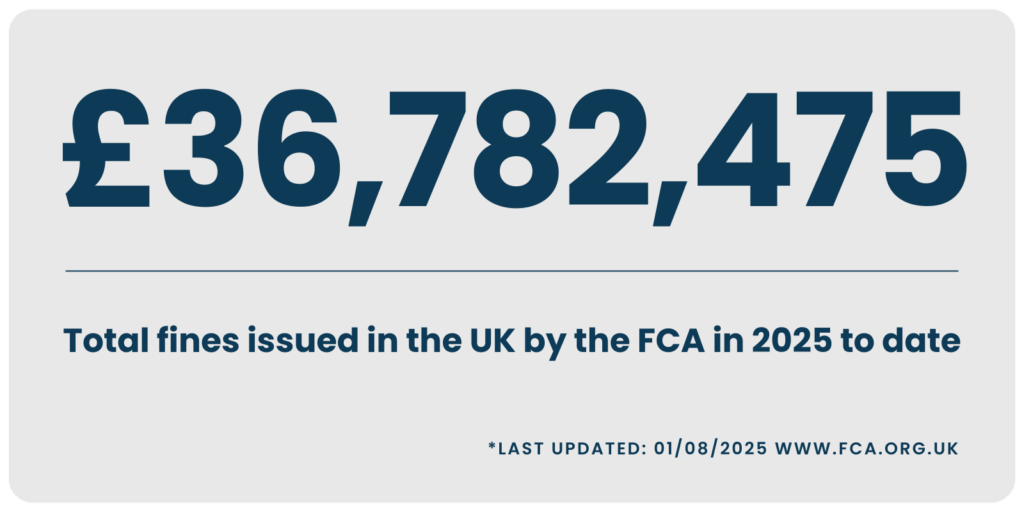
Numerous studies indicate, and almost every HR leader will admit, that traditional compliance training approaches often fail to engage employees meaningfully, leading to poor retention rates and increased non-compliance violations. The total amount of fines so far in 2025 issued by the Financial Conduct Authority in the UK is £36,782,475.37, illustrating the high stakes of non-compliance.
However, emerging research that Rocket Learning Rewards developed with the help of Learnovate Ireland demonstrates that strategically designed reward systems can meaningfully transform compliance training from a grudging obligation into an actively engaging process.
The challenge lies in the nature of compliance training itself.
Unlike inherently interesting activities (that motivate intrinsically), regulatory education and policy adherence often rank among the least engaging workplace tasks. This creates a perfect storm where organisations need maximum employee attention for content that naturally generates minimal interest.
Traditional training approaches relying solely on mandatory completion often result in superficial worker engagement, where employees complete training without meaningful comprehension or behavioural change in areas that in reality need critical awareness such as cybersecurity, workplace standards as well as many other key technical requirements.
Recent meta-analyses reveal that tangible rewards are particularly effective at increasing quantity of output, especially for less inherently interesting tasks such as compliance training. When employees can earn meaningful rewards for demonstrating competence in compliance areas, completion rates increase substantially.
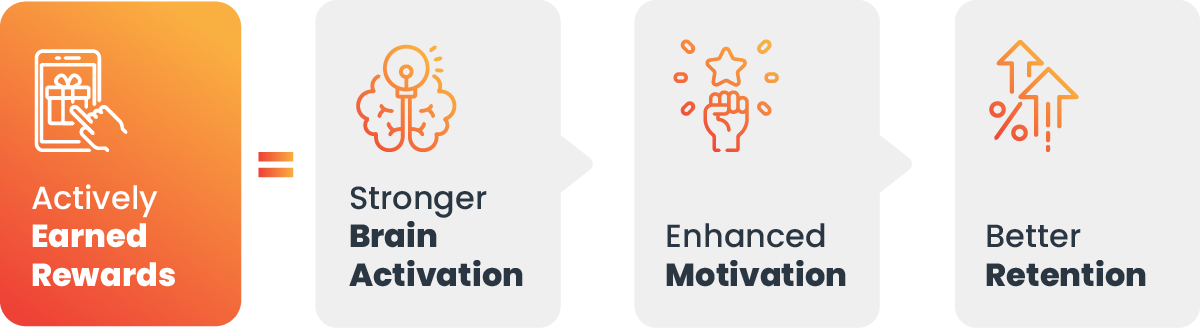
More importantly, neuroscientific research shows that actively earned rewards—those tied to performance criteria rather than simple participation—elicit stronger brain activation patterns, leading to enhanced motivation and better retention.
The key lies in designing achievement-based reward systems that link tangible incentives to consistent commitment and competence rather than mere completion.
Leveraging the current and previous research Rocket Learning Rewards helps achieve not only improved completion rates but also improved long-term compliance behaviours.
Rewards create positive associations with behavioural compliance activities, making employees more likely to engage proactively with future training and maintain compliant behaviours beyond the immediate training period.
However, implementation requires careful attention to reward framing.
Rocket’s collaborative Learnovate research indicates that rewards perceived as controlling can undermine intrinsic motivation, while those framed as informational feedback about competence can enhance it.
Rocket’s carefully conceived and delivered rewards integrations position real world rewards as recognition of professional growth rather than external manipulation, preserving employee autonomy while strongly encouraging positive compliance and active learning behaviours.